
Software design and architecture
Design turns agreed requirements into a structure that can be built, tested and operated. We draw the system at the right level of detail, decide the hard questions in writing and test screens with users while changes are still cheap.
When this helps
- Requirements are agreed and you need a buildable plan.
- An existing system must be extended and nobody has a current diagram of it.
- You want independent design documents before choosing a development team.
How the work runs
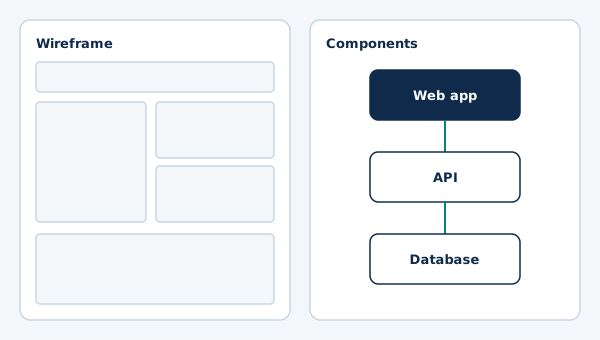
- Draw the context and containers. We use the C4 model, whose four hierarchical diagrams are system context, container, component and code (c4model.com). Most projects need the first two; the others are drawn only where they help.
- Model the data. Entities, their relations and their life cycle, including what personal data is stored, why, and for how long.
- Sketch and test screens. Low-fidelity wireframes first, then clickable prototypes for the critical journeys, checked against accessibility targets from WCAG 2.2.
- Record decisions. Every significant choice becomes an architecture decision record with title, context, decision, status and consequences, the format described by Michael Nygard.
- Review security early. We walk through the design against the risk categories of the current OWASP Top 10 and note the controls each one needs.
- Plan increments. The backlog is sliced into increments that each produce working, testable software.
Artefacts you receive
| Artefact | What it is for |
|---|---|
| Context and container diagrams | Who uses the system and which parts it consists of. |
| Data model | Entities, relations, retention notes. |
| Wireframes and prototype | The critical screens and flows. |
| Architecture decision records | Why the structure looks the way it does. |
| Security and accessibility notes | Targets and the controls that meet them. |
| Increment plan | What each increment delivers, without calendar promises. |
What we need from you
- Agreed user stories or time for a short analysis step first.
- Information about existing systems and hosting rules.
- Users available for prototype tests.